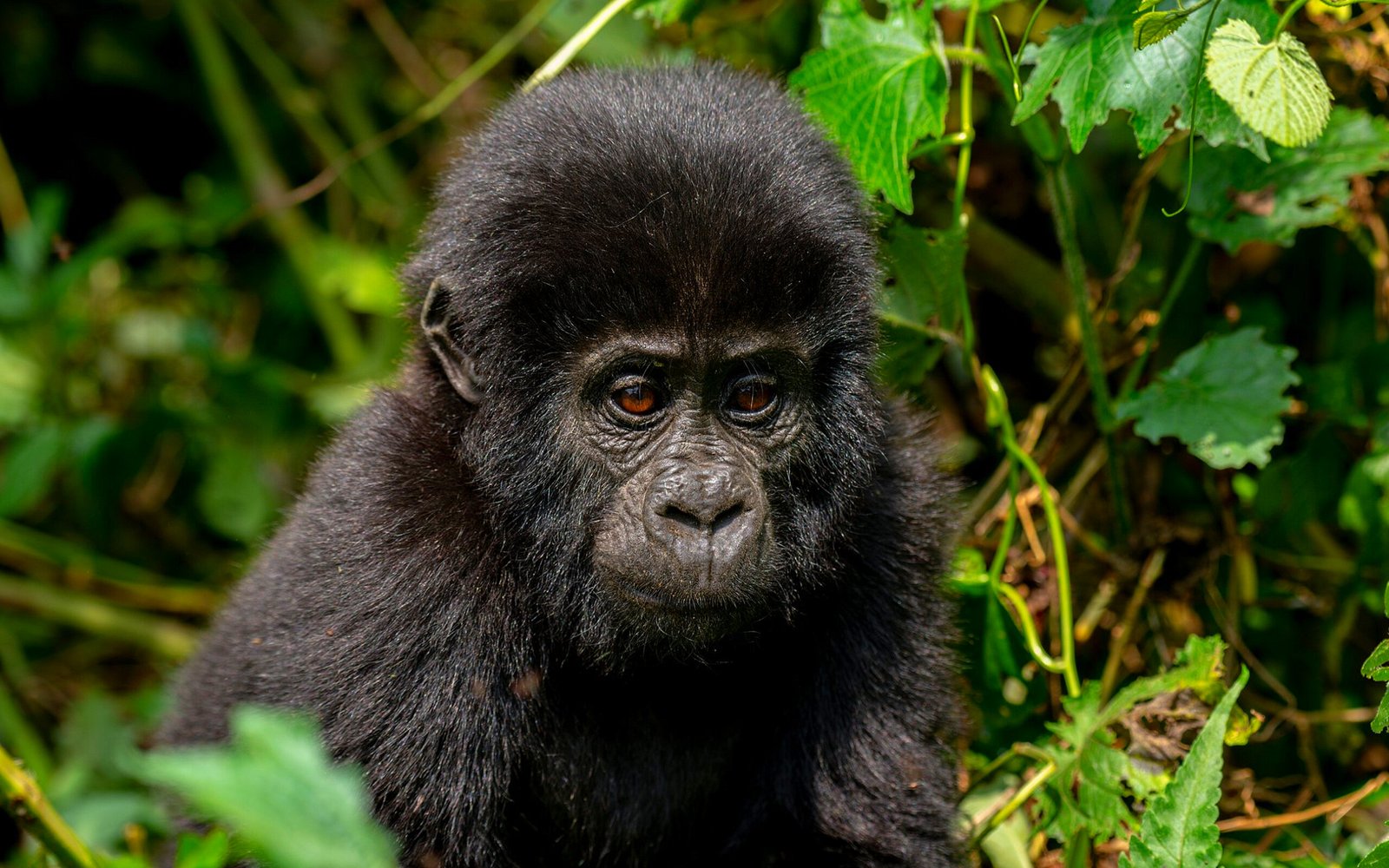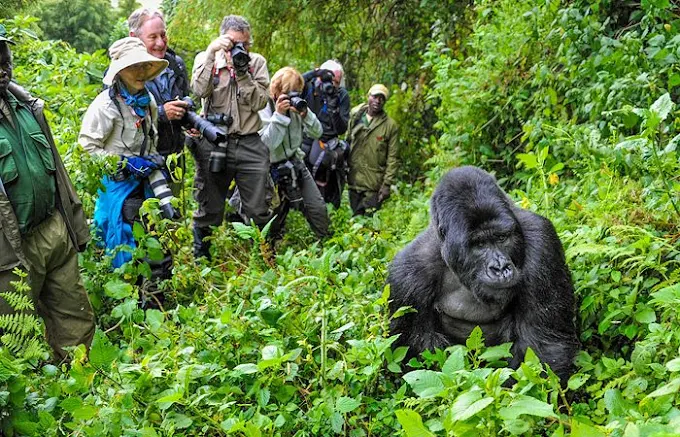
Photographing Gorillas is one of the harder wildlife photography challenges out there: dim rainforest light, a dark-furred subject, no flash allowed, and just one hour once you find the family. Here’s how to actually come home with good images.
Camera Gear
A mirrorless or DSLR body with strong high-ISO performance matters more here than almost any other safari setting, since forest canopy cuts out much of the available light. Full-frame sensors handle high ISO more cleanly than crop sensors, but a good crop-sensor mirrorless body still performs well.
For lenses, a 70–200mm zoom is the most commonly recommended range — long enough for tight portraits at a respectful distance, short enough to stay light on a multi-hour hike. A 24–70mm or wide-angle option is worth carrying too, for environmental shots when a gorilla wanders close. Avoid anything longer than 400mm; gorillas are often surprisingly near, and a heavy super-telephoto adds fatigue without adding value.
Pack spare batteries (cold and altitude drain them faster than usual — keep spares in an inner pocket) and extra memory cards, since you will likely shoot far more than on a typical wildlife outing. A rain cover or waterproof bag for your gear is essential; rainforest showers arrive with little warning.
Camera Settings
Most photographers converge on a similar starting point for Bwindi’s or Volcanoes forest interior:
- ISO:Start at 800–1600, and don’t hesitate to push to 3200 in the darkest patches of canopy — modern sensors handle noise far better than losing the shot to blur
- Aperture:f/2.8–f/5.6, wide enough to pull in more light and separate the gorilla from a busy background
- Shutter speed:At least 1/250s to freeze movement, since gorillas especially juveniles move more than you’d expect
- Focus mode:Continuous autofocus (AF-C / AI Servo) to track a subject that rarely stays still
- Exposure compensation:Dialing down slightly (around -1) helps prevent black fur from blowing out the surrounding highlights in patchy forest light
Shoot in Aperture Priority if you’re not fully comfortable in Manual it’s one less thing to manage in a fast-moving, low-light situation with a strict one-hour window.
The Flash Rule
Flash photography is banned across all three gorilla trekking countries, without exception. It’s not a suggestion rangers actively enforce it and will stop a trekker who keeps using it, since sudden bright light can startle or stress the gorillas. Turn flash off before you reach the trailhead, not after your first shot misfires.
Phone Photography
A modern smartphone can produce genuinely excellent gorilla photos, especially since encounters happen at close range where a phone’s fixed wide lens is less of a handicap than it would be on the savanna. A few adjustments help
- Tap to set focus directly on the gorilla’s eyes rather than trusting the camera’s automatic subject detection in low light
- Use the phone’s manual or pro mode if available, to control ISO and exposure rather than letting auto-mode overbrighten or motion-blur the shot
- Avoid digital zoom entirely it degrades image quality fast; move (safely, per your ranger’s guidance) rather than zoom
- Keep the phone dry with a simple sleeve or case, since condensation and rain are constant risks in the forest interior
Composition and Behavior
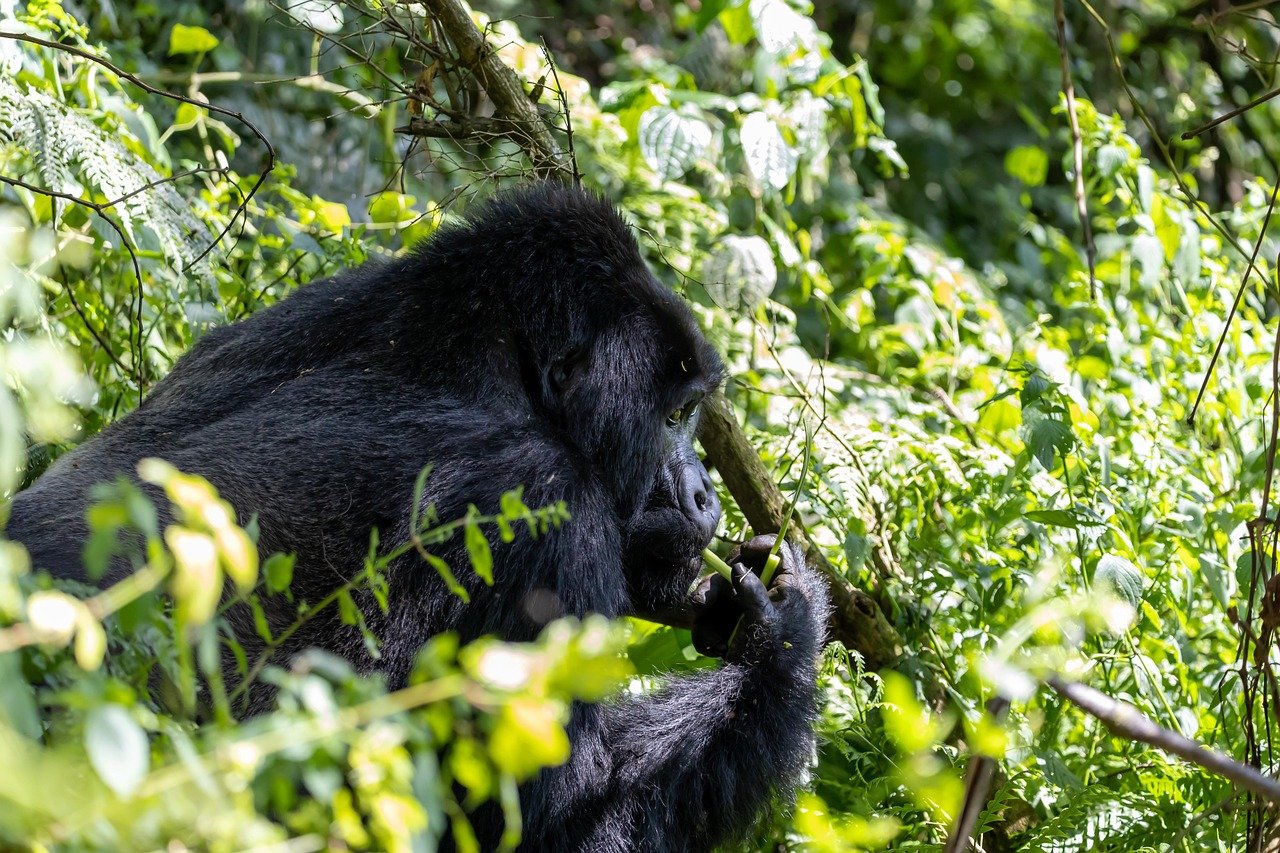
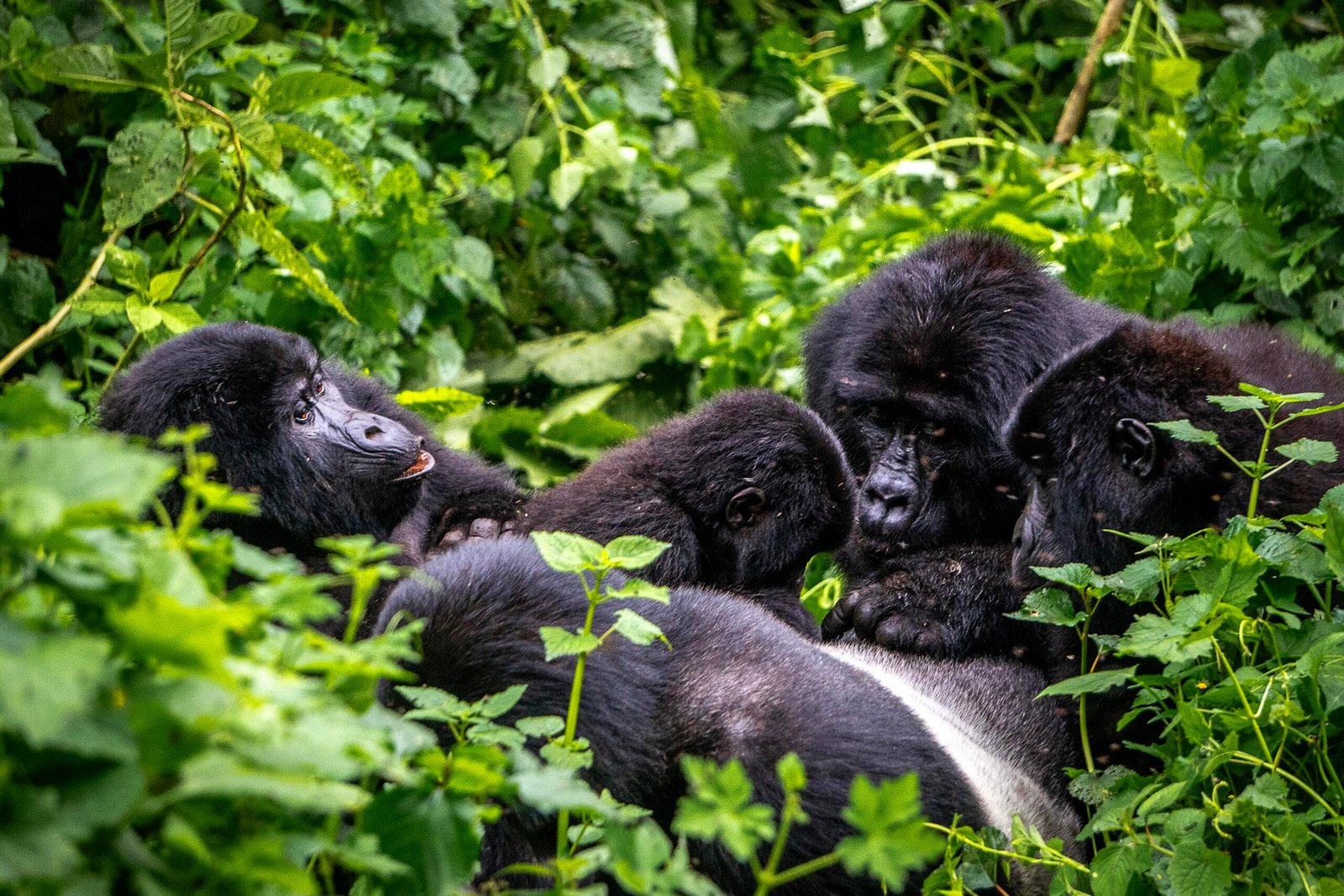
The best gorilla photographs tend to prioritize eyes and expression over full-body shots — a sharp, well-lit eye carries more emotional weight than a technically perfect wide shot. Patience beats machine-gun shooting: waiting for a natural gesture, a mother-and-infant interaction, or a shift in expression produces better images than constant rapid firing.
A Few Practical Reminders
- Choose one lens before you reach the gorillas and commit to it swapping lenses in humid rainforest risks moisture and dust on your sensor, and costs you shooting time within your limited hour
- Silicone gel packets in your camera bag help manage humidity between uses
- A lens cloth is worth carrying for the constant fine mist and dripping vegetation typical of both parks
The Bottom Line
Good gorilla photography isn’t about the most expensive gear it’s about having a camera (or phone) you know how to operate quickly, set correctly for low light, and ready before the encounter starts. The hour goes fast, and the best shots usually go to the trekker who spent less time fumbling with settings and more time watching for the moment.